9 Best AI Article Writers for Marketing Teams
Marketing teams lose hours every week sending revision requests back and forth because most AI writers still need heavy human editing. The gap shows up in first-draft quality and in how cleanly each tool fits into existing approval workflows. Choosing the wrong platform now means another round of tool switching six months later.
By the end of this article you will know the exact criteria to judge any AI writer, see a ranked list of nine options that match those criteria, and have a clear recommendation for the top pick. The outline walks through pricing models, scalability limits, and what each tool actually delivers to a marketing workflow before the final verdict names the single best choice for most teams.
What to Look For in AI Article Writers for Marketing Teams

Marketing teams need AI article writers that combine strong SEO capabilities with workflow integration and scalable output.
Teams should evaluate how deeply a tool analyzes search results before drafting content. SERP analysis depth determines whether generated articles address real user queries and ranking factors.
Keyword integration methods matter because writers must place terms naturally without disrupting flow. The best systems handle primary and secondary keywords while maintaining readable prose.
Plagiarism checking frequency protects brand reputation and avoids duplicate content penalties. Regular scans against existing web material keep output original and compliant.
Readability scoring systems help marketing teams match content to target audience levels. Automated scores guide adjustments that improve engagement and time on page.
Multi-language output consistency supports global campaigns that require accurate translations. Quality tools maintain tone and meaning across different languages without manual rewrites.
Collaboration permissions let multiple team members edit and approve content in one place. Clear access controls reduce version conflicts and speed up the editorial workflow.
Analytics dashboards track how published articles perform after launch. Performance metrics show which topics drive traffic and conversions for future planning.
API access options connect the AI content generator to existing marketing platforms and content calendars. Integration saves time by automating handoffs between tools and teams.
1. Autoblogging.ai - Best Overall
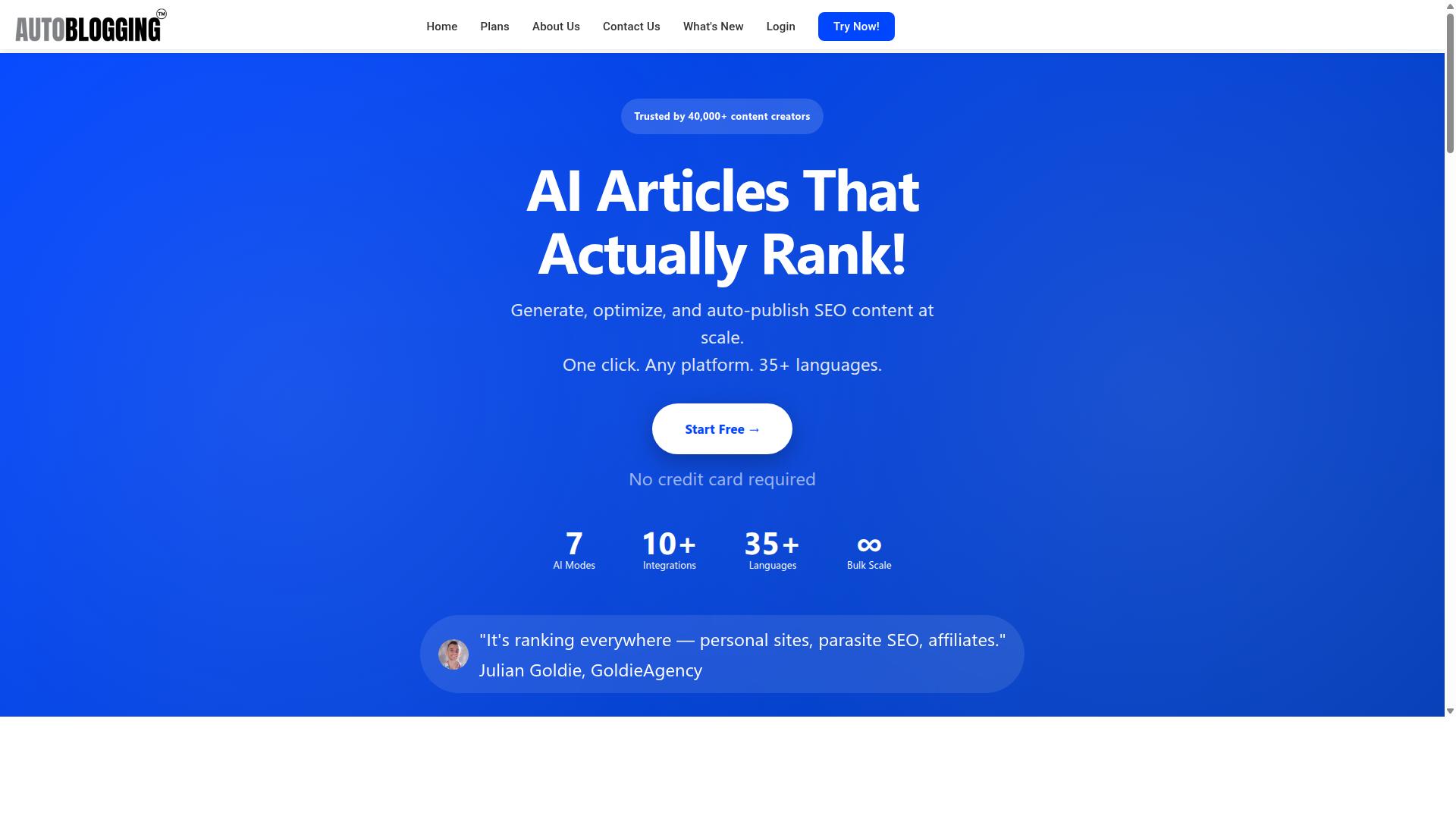
Autoblogging.ai leads this comparison by providing multiple generation modes and bulk capabilities tailored to marketing teams.
This AI article writer stands out because it offers 10+ AI modes plus SERP competitor analysis. The platform also supports bulk generation up to 500 articles at once.
Marketing teams gain an edge when they need consistent output across campaigns. The system helps reduce content costs while delivering first drafts that human writers can refine.
Key Features for Marketing Teams
Godlike Mode extracts knowledge graphs and LSI keywords from top-ranking pages to inform each article.
Quick Mode generates single posts when teams need fast turnaround on one topic. This approach works well for time-sensitive blog posts or short-form copy.
The platform supports 35+ languages for global content marketing efforts. Teams can create localized material without switching between separate tools.
Over 35 integrations connect directly to existing marketing stacks. Users can push content to WordPress, Shopify, Zapier, and API endpoints without manual transfers.
These connections support products_services across multiple platforms. Teams maintain their current workflow while adding automated writing capacity.
Pricing and Scalability
Autoblogging.ai scales from 40 credits at $19 per month to 5,000 credits at $999 per month.
The monthly tiers include Starter at $19 for 40 credits, Regular at $49 for 120 credits, and Standard at $99 for 300 credits. Higher tiers cover Gold at $179 for 600 credits, Premium at $249 for 1,000 credits, and Enterprise at $999 for 5,000 credits.
Annual plans reduce these rates further. Starter drops to $12 monthly when billed yearly while Enterprise falls to $649 per month under the same structure.
Credits rollover each month so unused allocations carry forward. New accounts receive 10 free credits without requiring a credit card.
2. Jasper
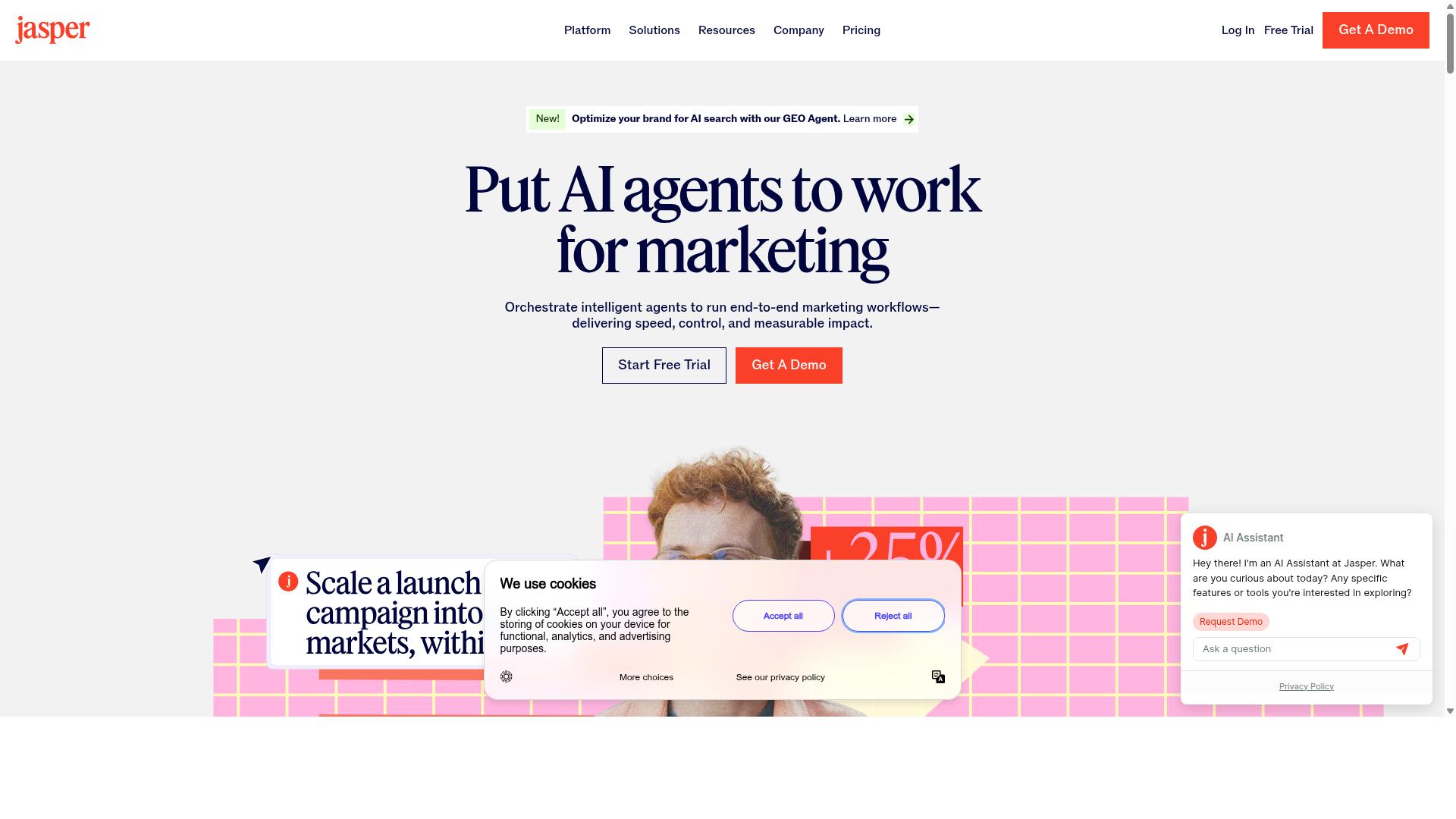
Jasper provides template-based long-form and short-form generation with brand voice training. Marketing teams use this AI writing tool to keep messaging consistent across channels.
The Brand Voice feature lets users upload examples of their best content. The system learns tone, terminology, and style preferences from those examples. This approach supports brand voice consistency as teams scale content production.
Jasper offers a template library covering 50+ use cases. Teams access templates for blog posts, ad copy, and email sequences. The platform includes Team Collaboration tools with role-based permissions.
Additional features include a Chrome Extension and Surfer SEO Integration. These tools help marketing teams streamline their editorial workflow and SEO optimization efforts.
Creator plan starts at $49/month. Teams and Business plans are available with custom pricing. Enterprise teams choose Jasper when they need consistent brand voice across multiple contributors.
3. Claude
Claude focuses on conversational long-form writing and large context window handling. This AI article writer excels when marketing teams need sustained narrative flow across extended pieces. The tool maintains topic coherence through many paragraphs without losing the original prompt direction.
Marketing teams often turn to Claude for blog post creation that requires deep reasoning tasks. The AI writing tool supports outline generation and initial drafts that human editors then refine. Experts recommend keeping a human in the loop for final content quality.
Context handling stands out as one of Claude's core strengths. Teams working on complex content strategy documents benefit from its ability to reference earlier sections while generating new material. This capability reduces the need to repeat background information in every prompt.
Typical usage scenarios include research summaries and thought leadership articles. The AI content generator helps teams overcome writer's block during early planning stages. Final drafts still require human review to match brand voice and audience expectations.
Claude works well alongside other AI writing tools in professional workflows. Marketing teams often pair it with SEO optimization platforms for keyword integration after the initial draft. This combination supports both creative development and technical content requirements.
4. Copy.ai
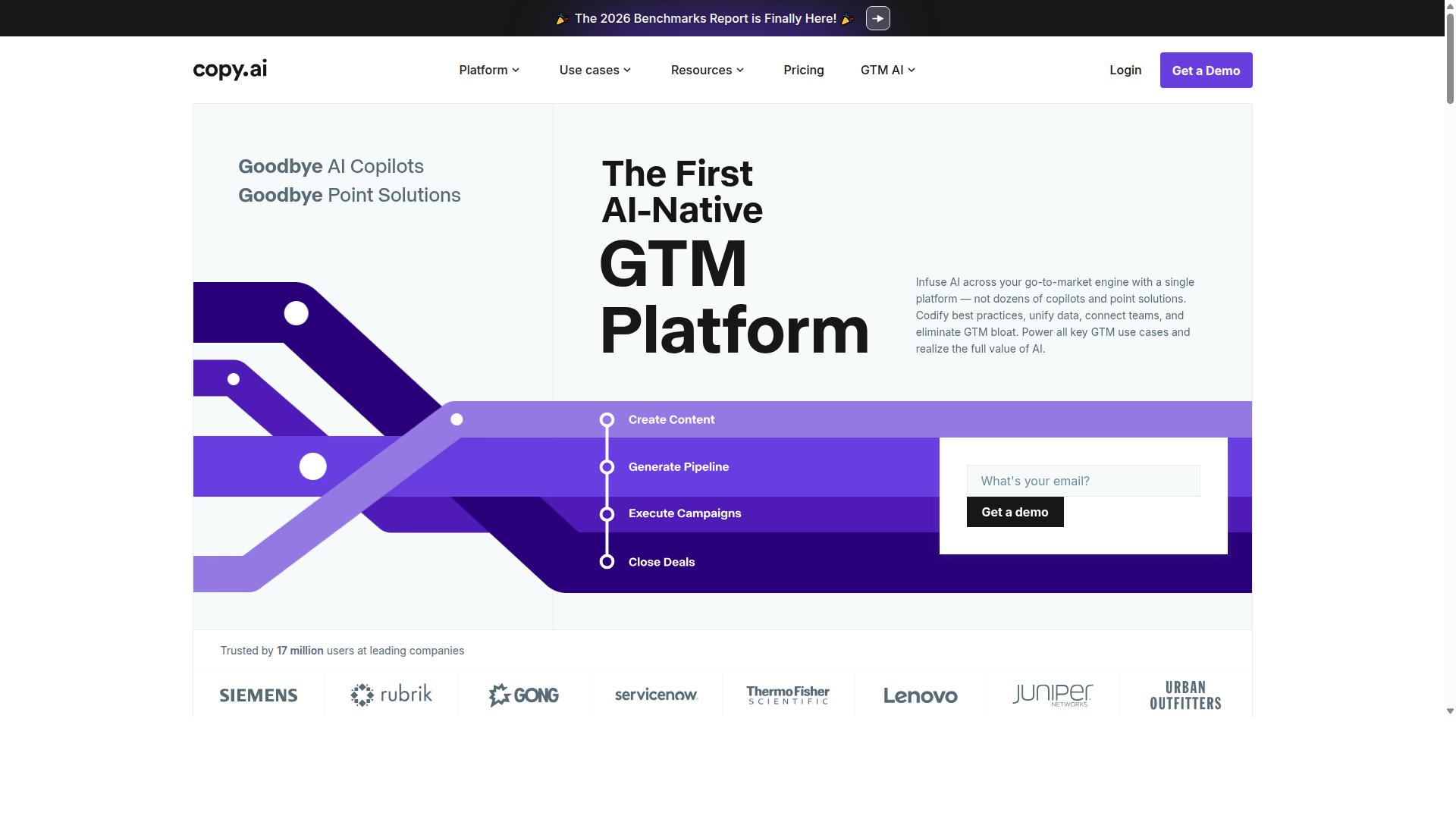
Copy.ai specializes in marketing copy templates and workflow automation. The platform offers a broad template library designed for marketing teams that need consistent output across campaigns.
Users select from over 90 templates covering email sequences, social posts, and sales enablement materials. GTM AI Workflows generate coordinated content across multiple channels in a single process.
The Infobase stores brand guidelines and product details for reference. This knowledge base helps maintain voice consistency throughout different content pieces.
Marketing teams often apply these features to ad copy, email campaigns, and short-form social content. The chat interface supports brainstorming sessions when teams need fresh angles quickly.
An API provides integration options for companies running automated publishing schedules. The free plan allows testing, while the Pro plan at $49 per month unlocks unlimited words for high-volume needs.
Teams focused on performance marketing and growth objectives find value in the short-form emphasis. The tool streamlines repetitive copy tasks that consume time during campaign launches.
5. ChatGPT
ChatGPT offers flexible conversational generation across multiple content types. This AI writing tool helps marketing teams generate outlines, scripts, and social media captions while overcoming blank page syndrome. Research suggests the platform serves as a foundational model across many other AI article writers.
Teams use ChatGPT for research tasks, initial drafting, and content editing. The tool handles both long-form content and short-form copy with strong natural language generation. Marketing teams find the conversational interface useful for iterative content strategy refinement.
Content repurposing becomes straightforward when users provide existing material for transformation. The AI content generator creates variations for different channels and audience segments. Writers maintain control over final output while using generated material as a starting point.
Brand voice consistency presents a limitation since the tool cannot replicate personal voice or lived experience. Marketing teams benefit from using ChatGPT outputs as raw material rather than finished articles. Professional writers often combine this approach with their expertise for stronger results.
Keyword research integration works when users input specific terms into their prompts. The platform supports multi-language support across numerous languages for global content marketing efforts. Editorial workflow improves when teams use the tool to generate initial structures and topic ideas.
6. Surfer
Surfer combines content optimization scoring with SERP data analysis. The platform examines top ranking articles and converts their structure into measurable recommendations for writers.
Teams receive a points based score that reflects how well their draft matches successful content. This system highlights gaps in word count, headings, and paragraph structure before publication.
The tool also provides keyword research features that identify terms appearing in high ranking pages. Writers can adjust their text in real time to improve relevance and search visibility.
Surfer works well with existing editors through integrations with Google Docs and WordPress. Marketing teams gain a clear checklist that guides revisions without replacing human judgment.
Users can generate initial drafts and refine them using the same scoring system. This workflow supports consistent output across multiple blog post creation projects each month.
7. Koala
Koala provides SEO-focused article generation with research automation. Marketing teams use this AI article writer to move from topic selection to completed drafts with less manual effort. The tool integrates keyword research directly into its content creation process.
Koala handles research gathering before users begin drafting. It pulls relevant information on chosen topics and organizes data points for writers to review. Content strategy becomes more efficient when teams skip the initial search phase.
The workflow keeps humans involved at every stage. Writers review research results then guide the AI content generator toward specific angles. Final edits remain under team control before publication.
SEO features include automatic keyword placement suggestions throughout the draft. Long-form content benefits from these optimization prompts during the writing process. Teams maintain control over how aggressively keywords appear in the final version.
Editorial workflow improves when research and drafting happen in one place. Blog post creation moves faster without switching between multiple research tools. The platform supports the human-in-the-loop approach experts recommend for quality results.
8. Writer
Writer emphasizes enterprise brand voice guidelines and team collaboration controls.
This AI writing tool focuses on governance and brand consistency at scale. Marketing teams gain oversight when content production involves multiple contributors and strict compliance requirements.
Enterprise features include style guides that maintain voice across documents. Teams apply these guides during content creation to reduce revisions and preserve messaging standards.
Collaboration tools allow multiple users to review, comment, and edit content within the same workspace. The system tracks changes and approvals to support structured editorial workflows.
Organizations use Writer when they need integration into existing enterprise systems. The platform supports content strategies that require both consistency and accountability across departments.
Marketing teams evaluating AI article writers should consider how well each option handles brand controls. Writer positions itself for teams that prioritize oversight during automated writing processes.
9. Rytr
Rytr delivers affordable short-form and blog templates for smaller teams. This AI writing tool provides options that fit basic marketing needs without complex setups.
Users access various template formats for quick content needs. The platform covers email sequences, social posts, product descriptions, and introductory blog sections.
General template options include multiple writing styles and tone adjustments. Marketing teams select from pre-built structures that match common campaign formats.
Rytr offers a free plan along with paid access starting at $9/mo. This pricing structure makes the tool practical for budget-conscious teams.
Smaller marketing groups benefit from the accessible entry point. The straightforward approach suits content marketing tasks that require speed over advanced customization.
How to Choose the Right Option
Selection depends on team size, content volume, SEO requirements, and budget constraints.
Marketing teams producing daily blog posts need an AI article writer that handles bulk generation without manual intervention.
Smaller teams focused on occasional short-form copy can work with lighter AI writing tool options that cost less per month.
Teams running multiple client websites benefit when their AI content generator supports consistent brand voice across different projects.
Content volume needs often determine the best AI writers for each situation. High-output teams require tools built for scale while occasional users can choose simpler platforms.
SEO depth requirements matter when marketing teams target competitive keywords. Tools with strong optimization features help teams rank for terms that drive qualified traffic.
Collaboration needs affect which AI content generator fits best. Teams sharing drafts and approvals need platforms that support multiple users editing the same content.
Budget tiers guide final decisions between premium platforms and affordable alternatives. Marketing teams balance feature depth against monthly costs to find sustainable options.
Autoblogging.ai serves bloggers, website owners, SEO professionals, marketing agencies, and content creators who manage personal sites, affiliate sites, client websites, and portfolio sites.
The platform addresses target_audience needs across different content marketing scenarios. This reach makes it suitable for teams handling varied client requirements and site types.
Final Verdict
Autoblogging.ai stands out for marketing teams that require bulk generation, SERP analysis, and flexible credit scaling. The platform delivers verified performance backed by 40,000 plus content creators who trust its capabilities.
Users generate more than one million articles through the system. The 4.9 average rating reflects consistent satisfaction across different team sizes and project types.
Marketing teams gain access to 10 plus AI modes that handle varied content needs. The tool supports 35 plus languages for global campaigns and campaigns that cross borders.
Weekly feature releases keep the platform current with changing requirements. Credits rollover prevents waste on unused resources during slower periods.
Human proofreader tools appear in every plan to maintain quality standards. The 21 point SEO audit checks content against established optimization criteria before publication.
One click WordPress publish speeds up the workflow from draft to live post. SERP competitor analysis helps teams understand what already ranks for target keywords.
Semantic SEO tools strengthen content structure for better search visibility. Featured snippet optimization increases chances of earning position zero results.
Marketing teams benefit when an AI article writer provides bulk output capacity alongside detailed analysis features. Autoblogging.ai delivers these exact capabilities through its verified feature set.
Frequently Asked Questions
What are the key benefits of using AI tools for content creation in marketing?
The 9 Best AI Article Writers for Marketing Teams help streamline workflows, ensure consistent brand voice, and boost productivity by generating high-quality drafts quickly.
How do AI article writers improve SEO performance for marketing content?
Many solutions from the 9 Best AI Article Writers for Marketing Teams include built-in keyword optimization and readability scoring to help content rank better in search results.
What should marketing teams consider when selecting an AI writing platform?
Focus on integration options, customization features, and pricing models when reviewing the 9 Best AI Article Writers for Marketing Teams to match your team's specific needs.
Can AI writers fully replace human content creators for marketing campaigns?
While efficient, the 9 Best AI Article Writers for Marketing Teams work best alongside human editors to refine tone, add unique insights, and ensure accuracy.
How much do top-rated AI article writers typically cost for marketing use?
Options within the 9 Best AI Article Writers for Marketing Teams range from free tiers to enterprise plans, often starting around $20 per month depending on usage volume.
Where can marketing teams begin testing AI writing tools effectively?
Start by comparing features and trying demos of the 9 Best AI Article Writers for Marketing Teams to identify the best fit before committing to a subscription.
Recommended Resources: